Human activities threaten wildlife around the world. Our collection efforts initially focused on gorillas, but as human impact expanded to other species, so did our collection efforts.
Flamingos
The shallow lake habitats that are home to Andean highland flamingos, which include Andean, Chilean, and James’ flamingos, are increasingly used for mining lithium and other human activities.
Lithium is the key metal in manufacturing batteries for personal electronics, electric vehicles, and other devices. Mining for this metal, especially in the Lithium Triangle of South America’s Andean highlands, negatively impacts the surrounding habitats, reduces water levels, and disturbs wildlife, like flamingos.
As demand for electronic devices grows, mining activity increases, threatening the ecosystems that are home to flamingos.
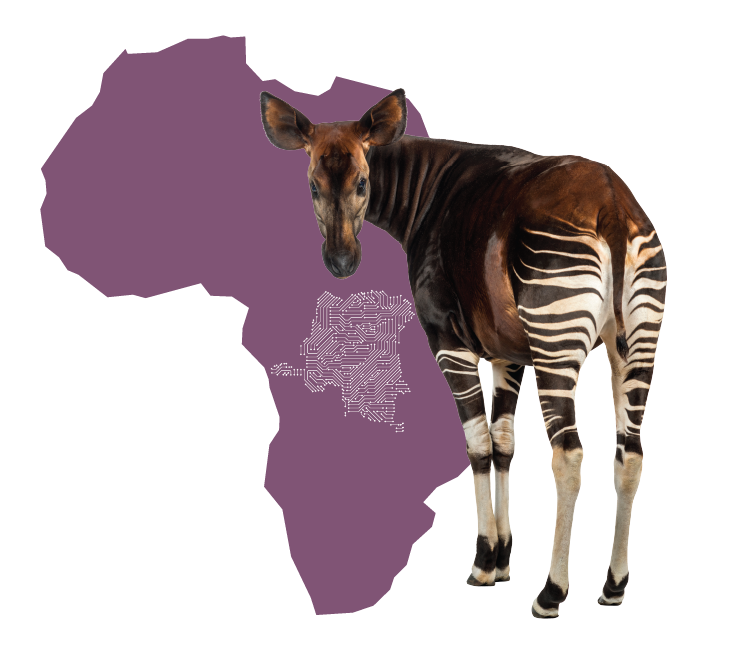
Okapi
The Democratic Republic of Congo is home to diverse animal species and significant quantities of coltan, an essential ore used in cell phones and other electronics. The destructive mining practices employed to extract coltan are devastating the forest environment and diminishing the populations of these vital species. Unfortunately, as our reliance on new technologies grows, so will the coltan trade.
Fortunately, dedicated initiatives like the Okapi Conservation Project work tirelessly to safeguard the okapi and their forest habitat. By reducing material consumption, recycling cell phone components instead of landfilling them, and contributing to conservation efforts, we can achieve a truly beneficial outcome for all.
Macaws
The macaws of South America rely on old-growth palm trees for cavity nesting. But coltan deposits are found throughout the Guiana Shield, in the riverbeds where many of these palms grow, particularly in Venezuela, Colombia, and Brazil. In recent years, an increase in illegal strip mining, which takes place on the surface rather than deep underground, has battered riverbanks and uprooted rainforest giants.
Species with declining populations, such as the blue-and-yellow and red-and-green macaws, struggle to reproduce as deforestation destroys their habitats. The greater the demand for electronics, the more difficult it is for them to nest and grow.